little big brain
Product / Ontology

An ontology that fits your data.
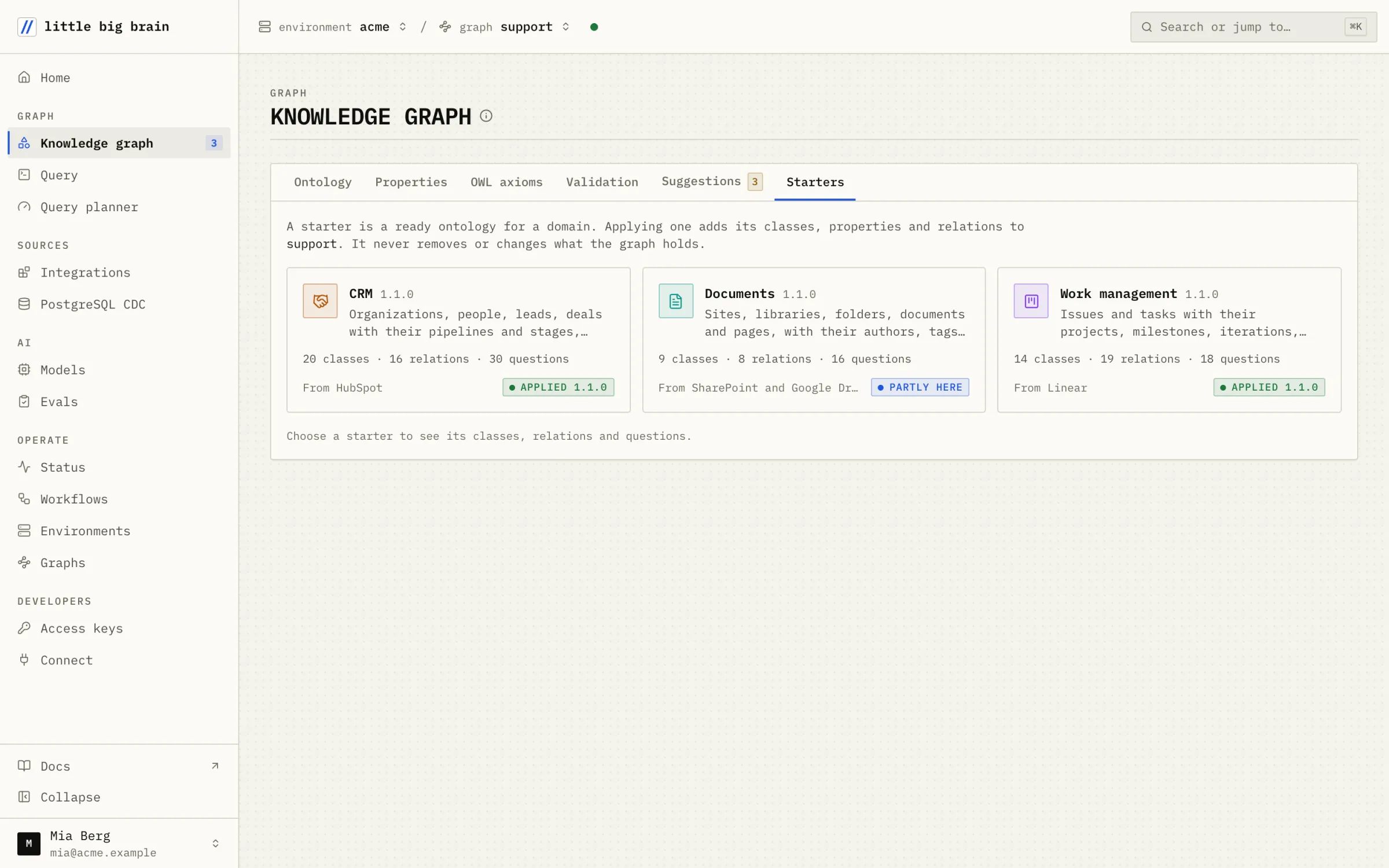
Apply a starter. Review the suggested changes.

Starters cover CRM, documents and work. We compare your records with the ontology and suggest the missing parts.

[01] In the console

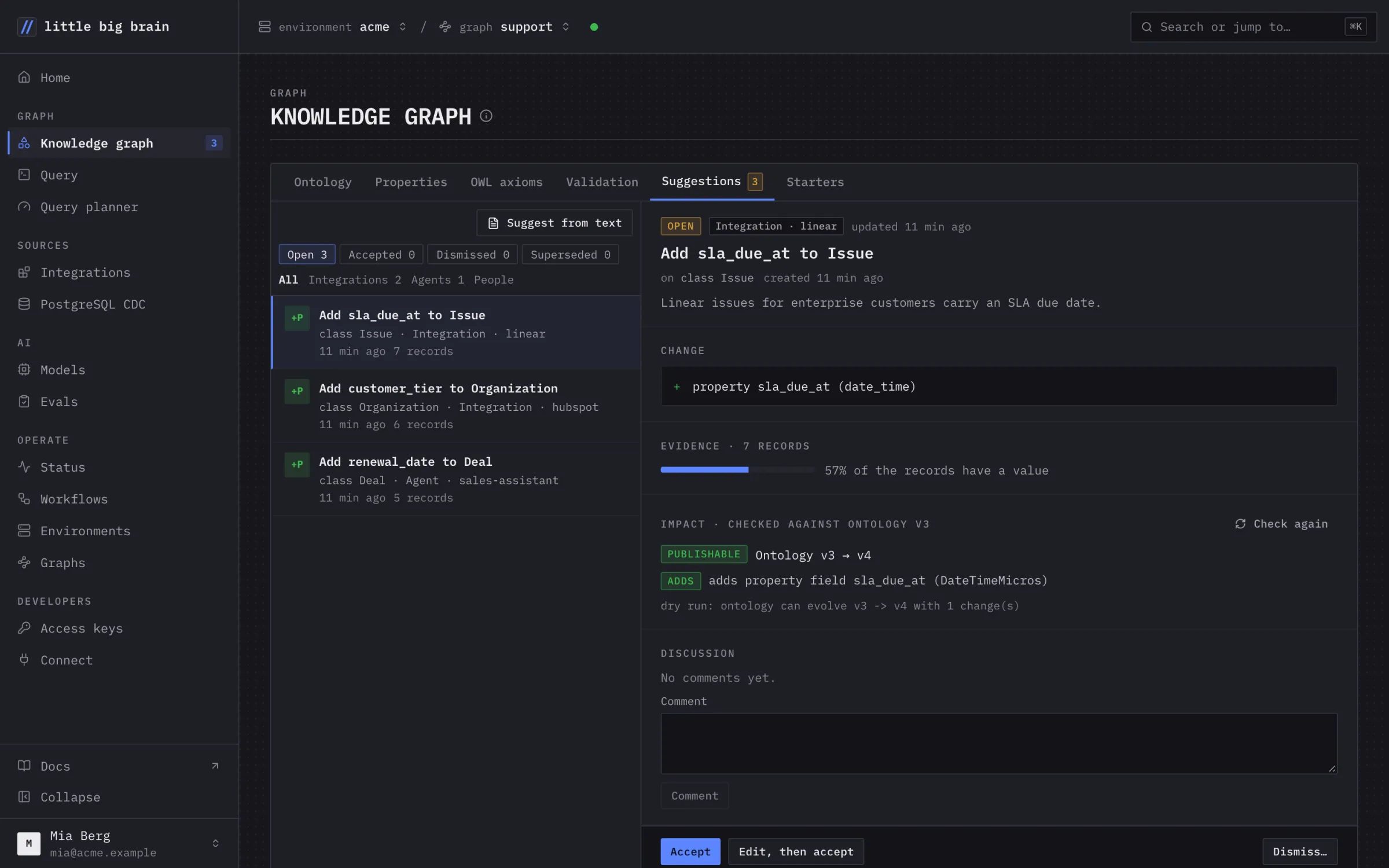
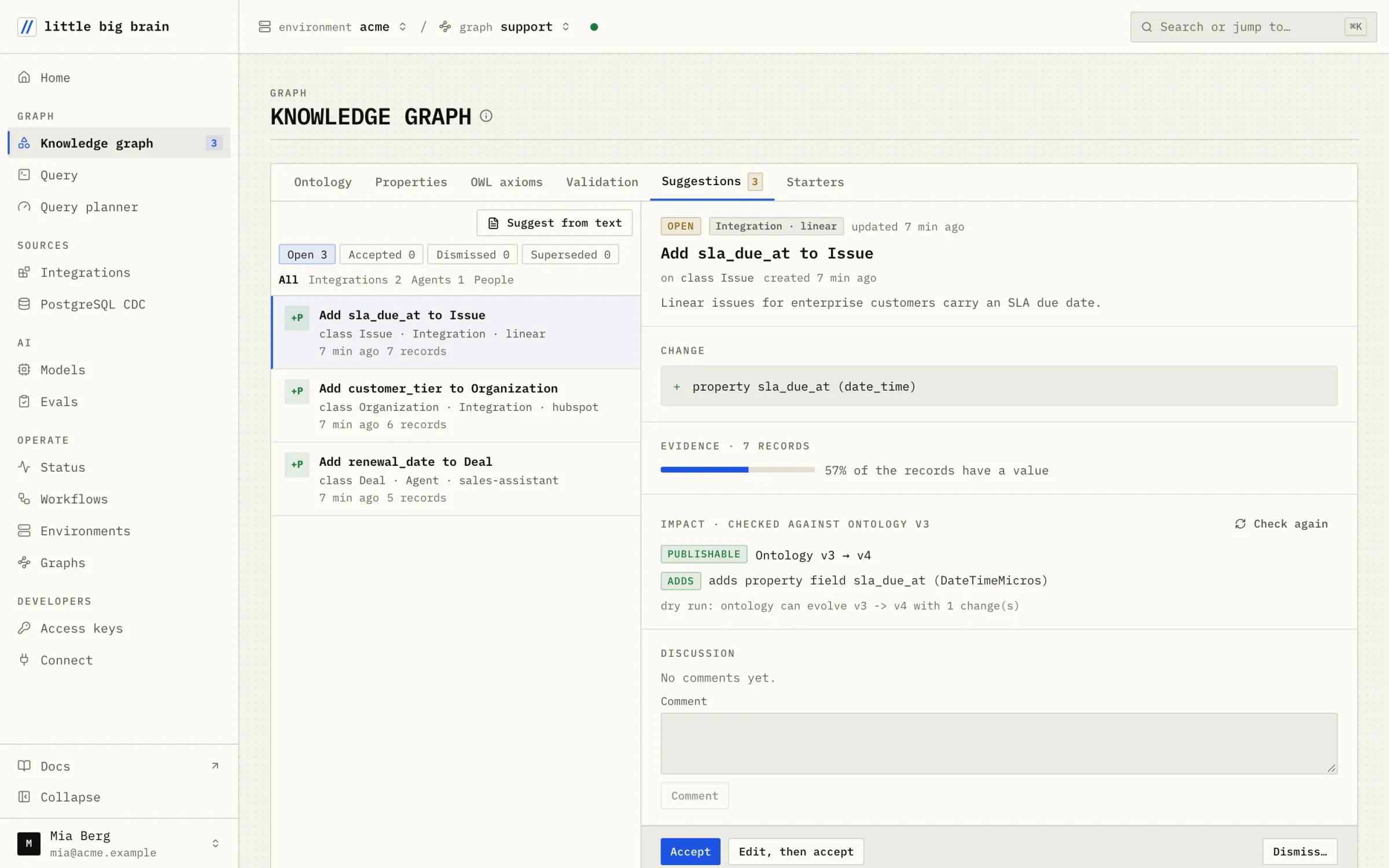
Suggestions with their evidence.

Counts, fill rate, samples and a dry run of the impact. You accept, edit or dismiss.
The Starters tab: the CRM, Documents and Work management starters with their classes, relations and questionsThe Starters tab: the CRM, Documents and Work management starters with their classes, relations and questions
The Suggestions tab: three open suggestions from Linear, HubSpot and an agent, one opened with its evidence and impactThe Suggestions tab: three open suggestions from Linear, HubSpot and an agent, one opened with its evidence and impact
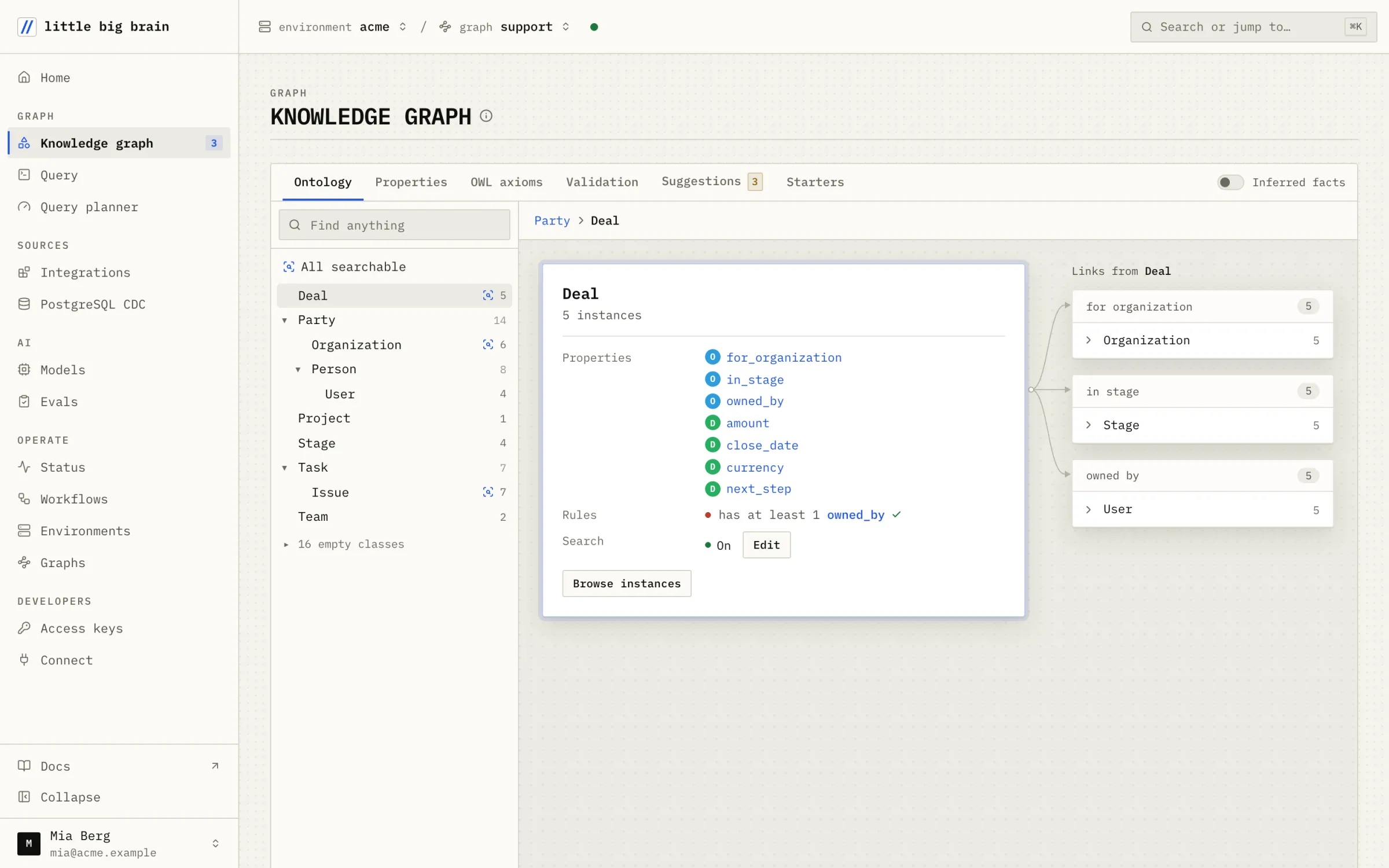
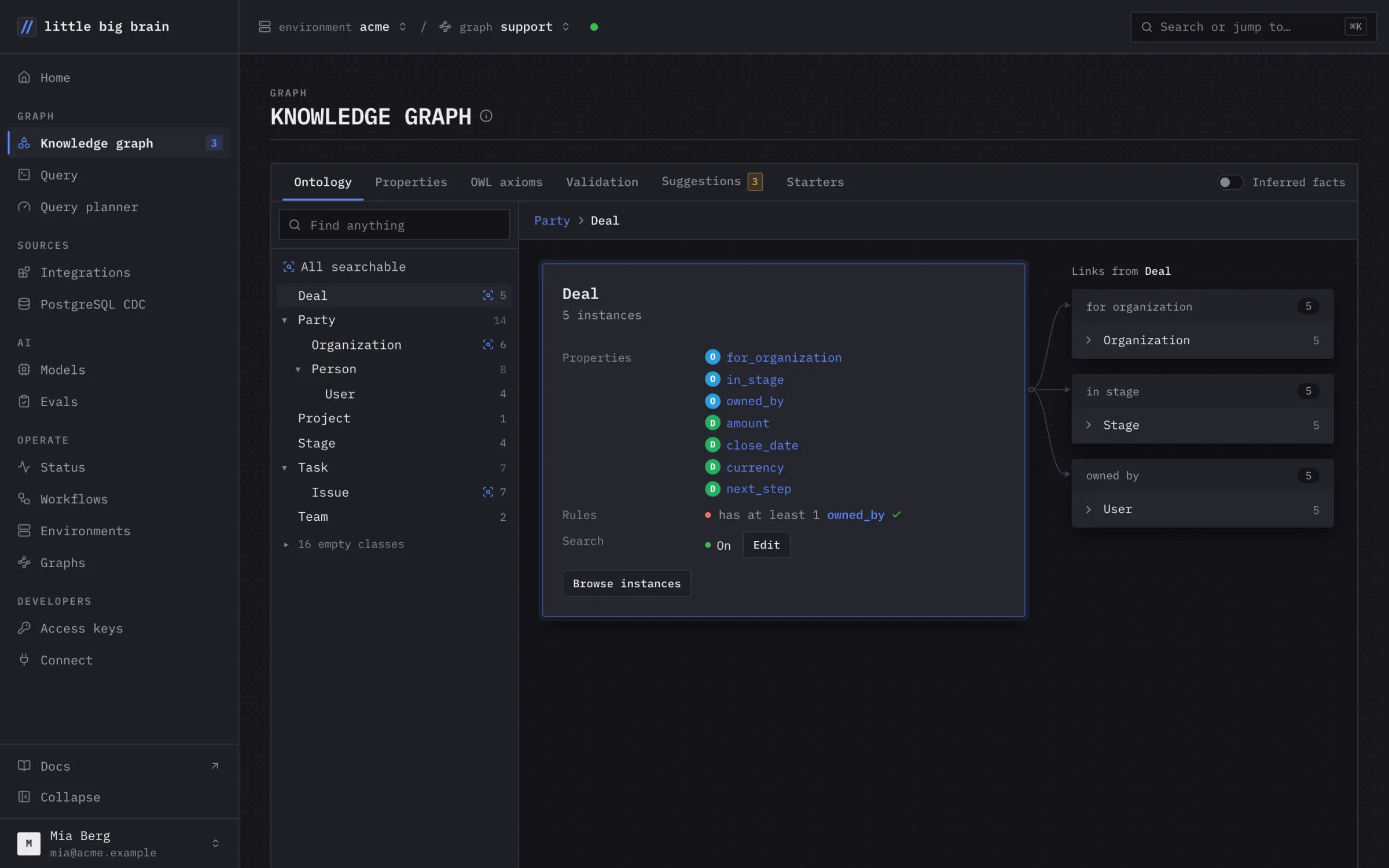
The Knowledge graph page: the Deal class with its properties and its links to Organization, Stage and UserThe Knowledge graph page: the Deal class with its properties and its links to Organization, Stage and User
Three starters.

crm, documents and work, with classes, relations and tested questions.

A dry run first.

See what a starter or a change adds before you apply it.

People decide.

Agents can propose changes through MCP. Only people accept them.
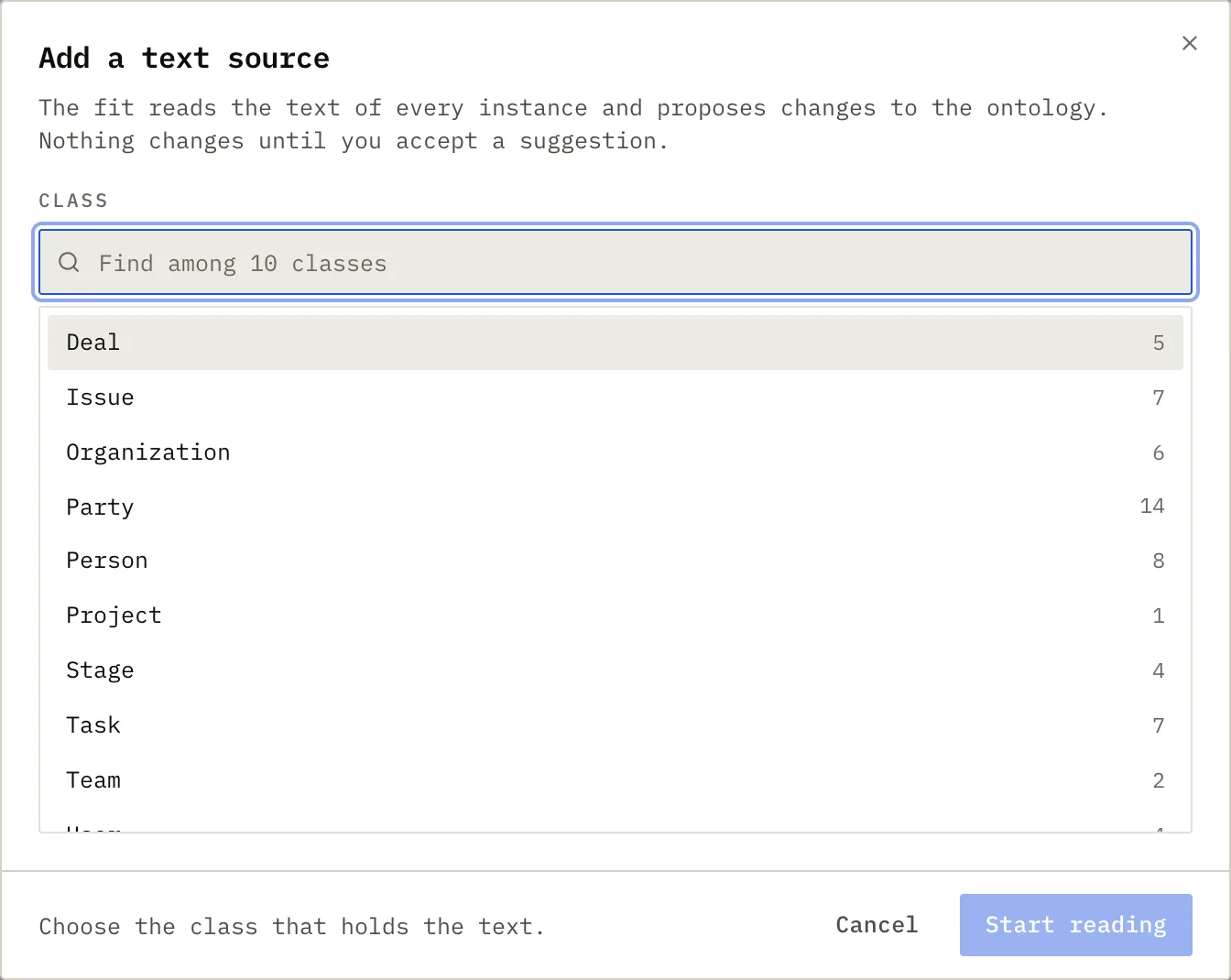
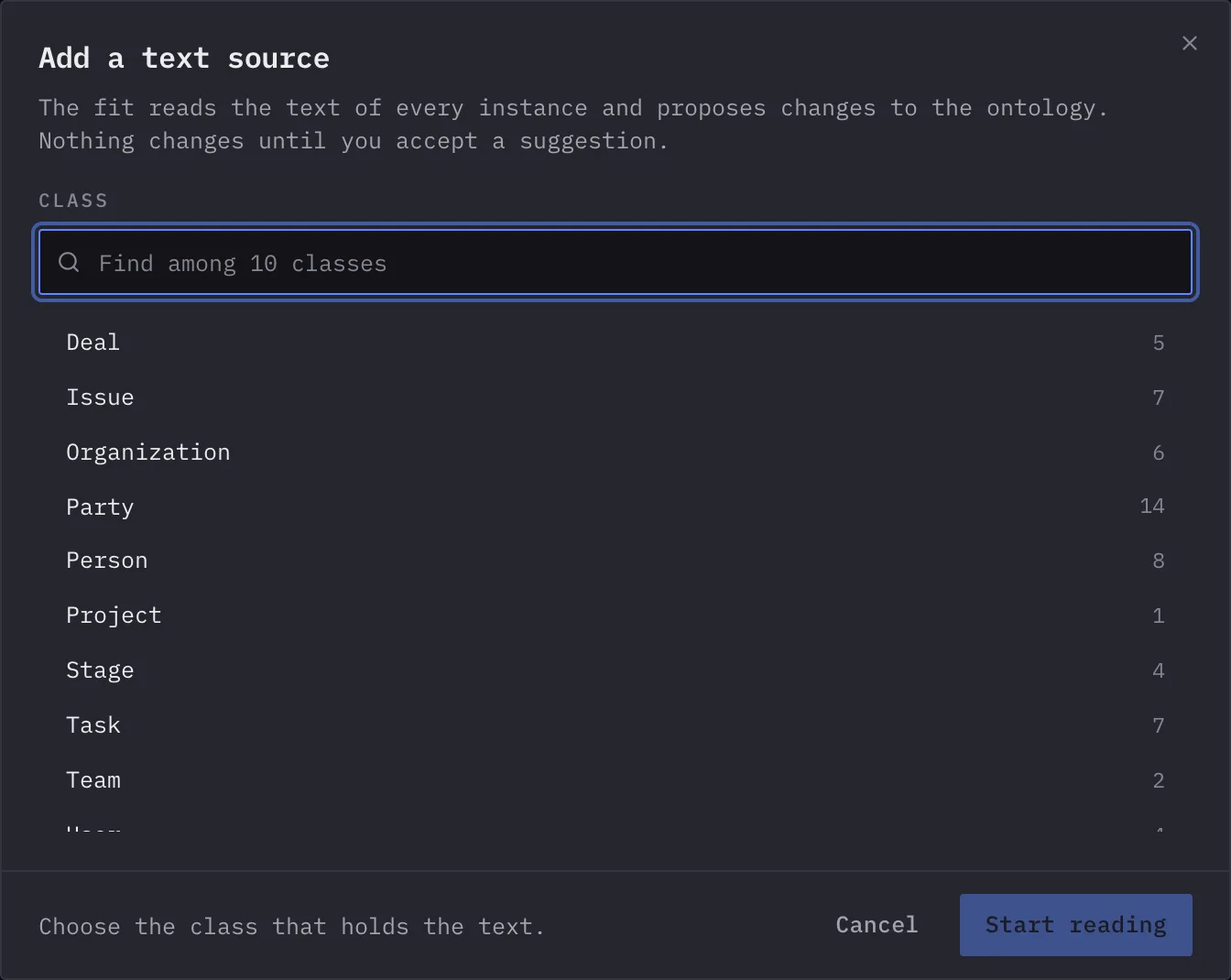
The Add a text source dialog: choose the class that holds the textThe Add a text source dialog: choose the class that holds the text
Add a text source, then choose the class that holds the text.
[02] Fit from text

Proposals from call notes.
With a quote from the text.

Point a fit source at a text property, like call notes. A model proposes changes and quotes the text. The quotes are checked against the source text.

  • A second model scores the support. Below 0.5, a change is dropped.
  • The rest are filed as suggestions.
  • The fit proposes ontology changes. Extracting facts stays with you.
Fit from text
[03] What is included

What you start from.

The ontology lives in the graph, next to the facts.

crm

20 classes, 71 properties and 30 questions with SPARQL.

documents

Sites, libraries, folders, documents and pages, with 16 questions.

work

Teams, projects, issues, milestones and iterations, with 18 questions.

evolve

Add, rename, widen, narrow or remove types, relations and properties.

SAME_AS

Link two to ten records that name one thing. Nothing is deleted.

OWL

Define classes from OWL in Turtle, JSON-LD, RDF/XML or CSV.

[04] How it works

Starter first, then suggestions.

Step 01

Apply a starter.

A dry run shows what it adds. Then apply it.

Step 02

Review suggestions.

A suggestion shows counts, fill rate, samples and its impact.

Step 03

Accept what fits.

Accept, edit then accept, or dismiss with a reason. An accepted change is written as a commit.

[05] FAQ

Questions about ontologies.

What is an ontology here?

The classes, properties and relations of your graph. Sources map to it, and SHACL rules check writes against it.

Do I have to use a starter?

No. Define your own classes, or import OWL.

Can I update a starter later?

Yes. An update files the missing parts as a suggestion.

What happens to a dismissed change from text?

It reopens only when its support doubles and at least three more texts back it.

Next step

Try it on your data.