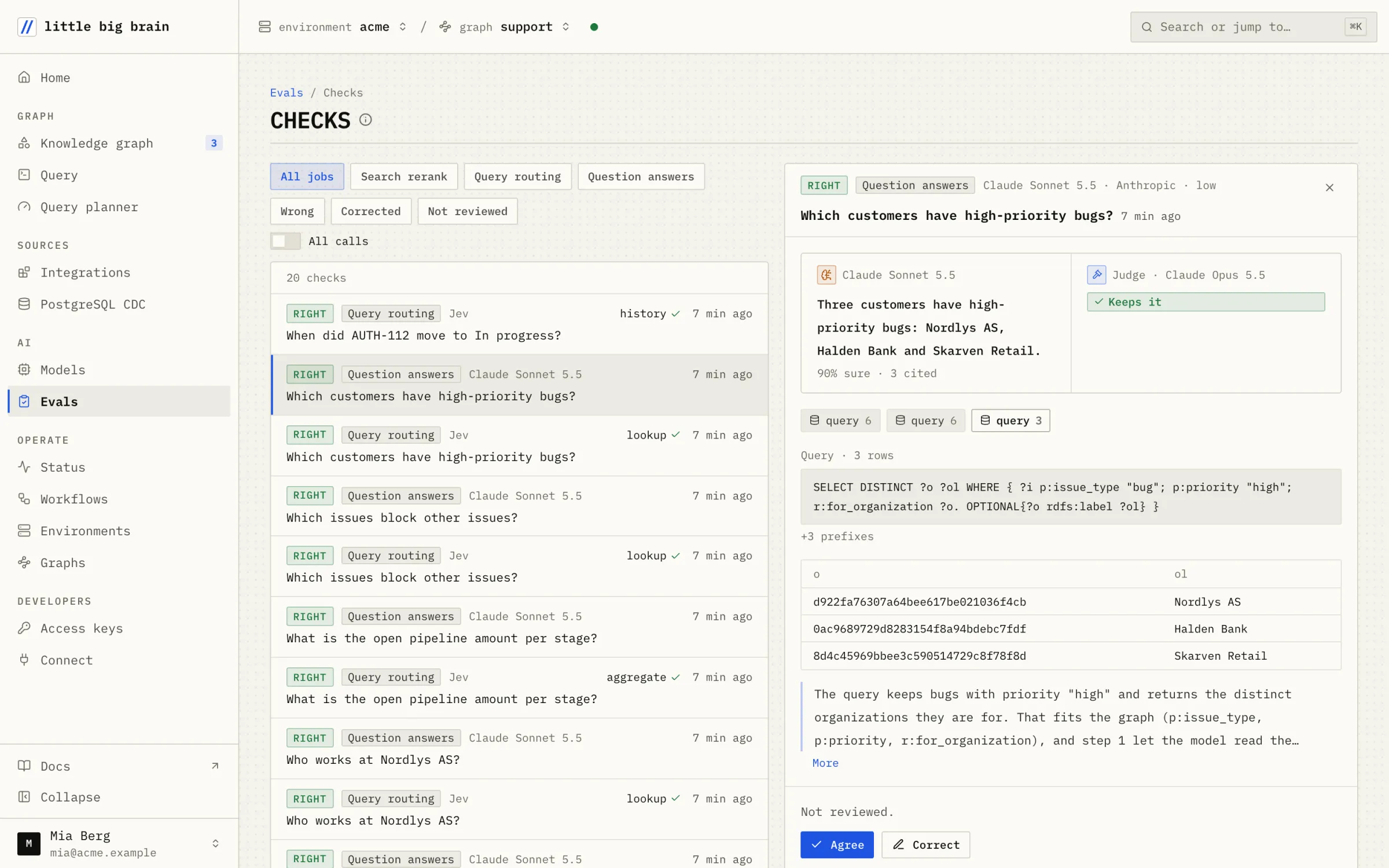
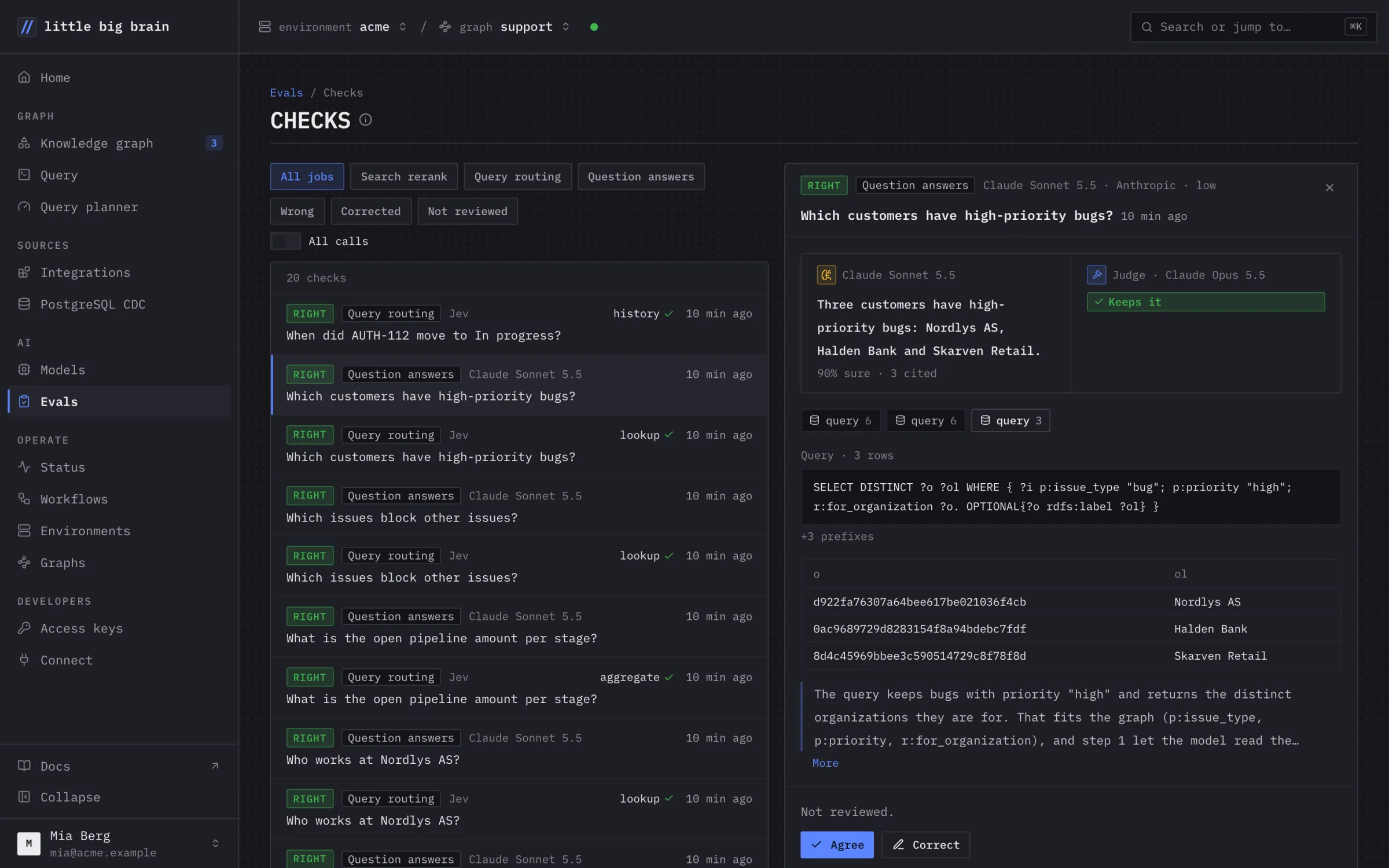
Route.
Jev, from TypeSafe, selects one of six routes.
One call answers a question from your graph. The answer cites its rows, and the server checks the citations.
A router selects the route. Then a model runs SPARQL in a bounded loop and answers.
The response holds the SPARQL and the rows behind the answer.
At most 4 rounds and 12 steps. A question takes about 6 to 12 seconds.
Lookup, aggregate, search, history and schema. A sixth route marks a question unanswerable.
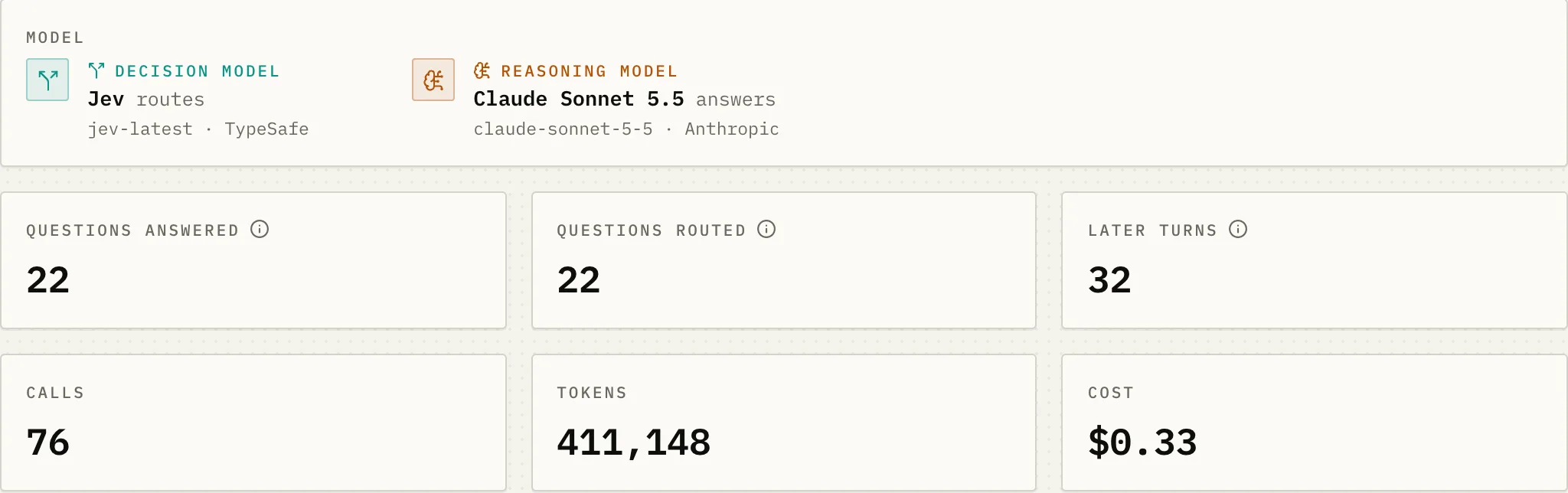
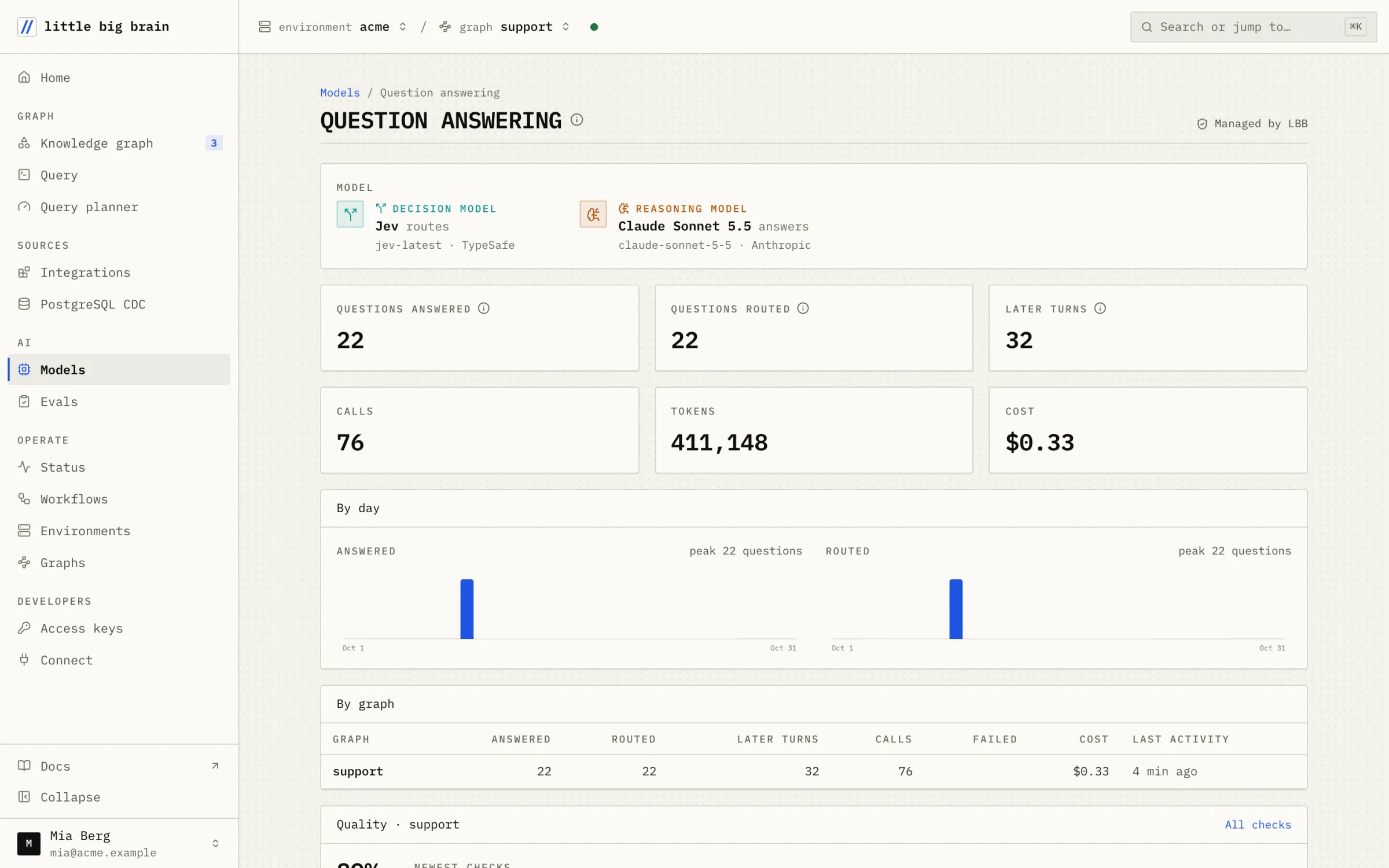
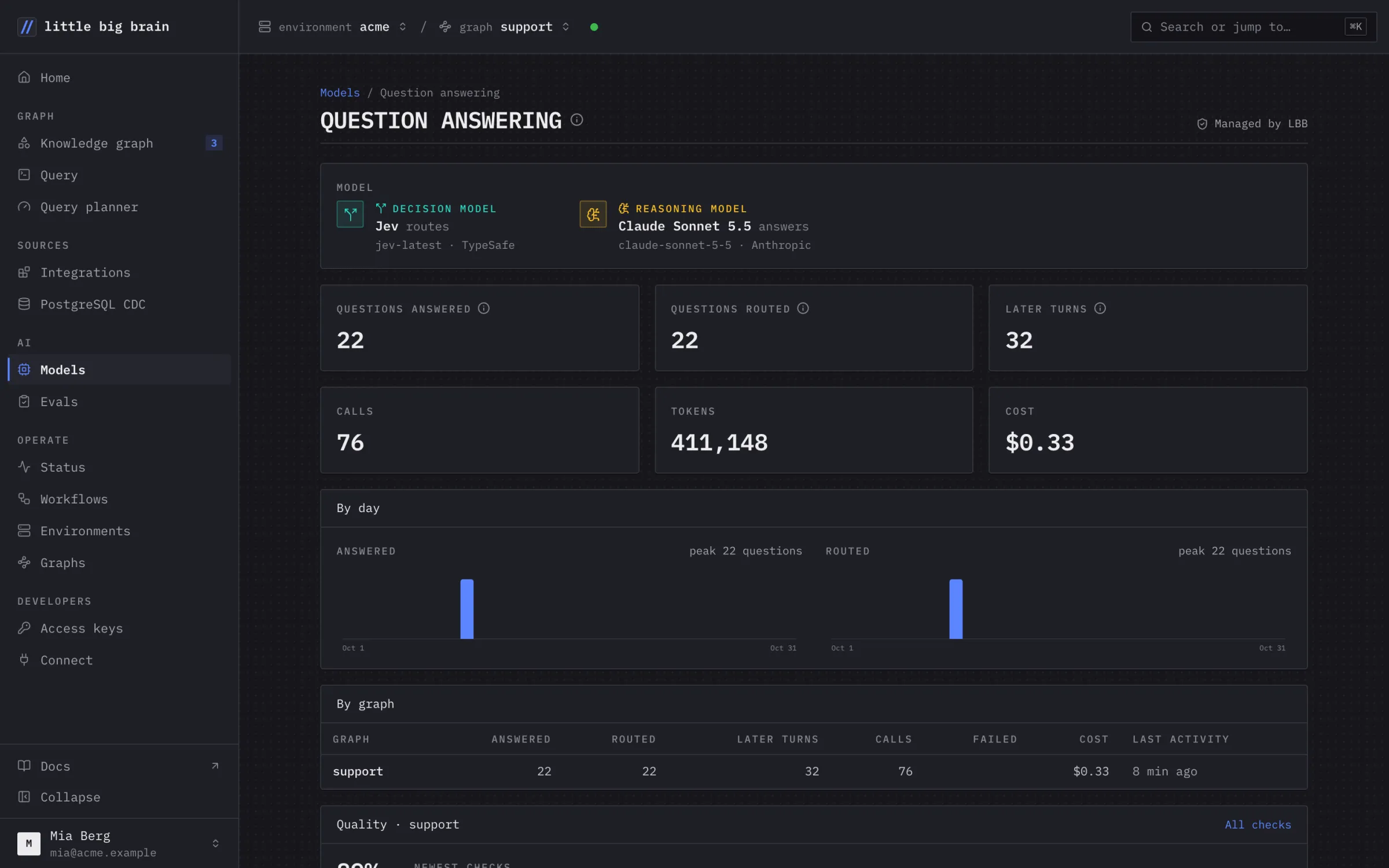
The Question answering page names the models behind the answers. It counts questions, calls, tokens and cost.
An answer for your users, and the parts behind it for your code.
POST /v1/query/askThe answer, the query, its rows and the steps that led there.
mode: routeThe route alone, in about 0.3 seconds.
askStreamServer-sent events while the answer forms.
names · describe · compareTools for your own agent loop, with no model calls inside.
lbb_queryModes question, names, describe, commit_at and compare over MCP.
modelsTokens and cost per model, in the response.
Jev, from TypeSafe, selects one of six routes.
Claude Sonnet 5.5 writes SPARQL and reads the rows, for up to 4 rounds.
The answer cites rows. The server checks the citations against them.
About 1 to 2 cents in model use. The response lists the tokens and the cost.
500 questions per environment per UTC day.
Yes. Call lbb_query with mode question over MCP, or query.ask in the SDKs.
Cloud and Pro. Free includes search by meaning.